


From a School in South-East Birmingham to the Mountains of Nepal: How one Headteacher is Opening Up the World for his Students
Blog by Julia Felgate, Chief Marketing Officer, Challenges Abroad
Ciaran Clinton, headteacher at Archbishop Ilsley Catholic School in Birmingham, has led multiple Challenges Abroad expeditions with his students, taking cohorts to Nepal, Cambodia, and Peru. With a Thailand trip in the pipeline and a brand new global citizenship club, here’s his story of why these experiences matter far more than anything four walls can offer.
When Ciaran Clinton first spotted an email from Lizzie George, Head of Further Education Programmes, in what seemed like a mass mailshot to schools, most people would have scrolled past it. But for a teacher who had spent time in Japan and had long believed in the transformative power of international experience, something made him stop. “I spotted Lizzie’s email and it stood out,” he recalls. He was already thinking about how to make it happen. He replied immediately.
That instinct has since shaped the lives of dozens of young people from one of Birmingham’s most under-resourced communities. Around 50% of students at Archbishop Ilsley receive free school meals. Many have never travelled abroad. For Ciaran, that makes what Challenges Abroad offers not just valuable, but essential.
“To have opportunities like that, if you are from a deprived background, to go abroad, sometimes funded, sometimes not, it’s totally life changing.”
Breaking the limits students place on themselves
Ciaran knows firsthand what it feels like to grow up without global horizons. “When I was at school, I had opportunities and came from a really loving family, but because times were hard, I had three brothers, we didn’t really go abroad.” It was a stint in Japan in his twenties that changed everything. He saw his own world expand almost overnight, and he has spent the last twenty years trying to create that same moment for his students.
What strikes him most is not the logistics of international travel, but the invisible ceiling many young people carry with them. The idea that certain experiences, certain futures, simply are not meant for them.
“There’s the idea of entitlement,” he says. “You think, of course a student from a well-resourced school would do that. But that’s not me.” His role, as he sees it, is to dismantle that assumption before it takes hold. To look a student in the eye and say: it is you.
The trips deliver on that promise in ways no assembly or careers lesson can replicate. “If you go to Peru for two weeks on your own, without your mum and dad, you come back different,” he says. “When I say to them, how do you feel about going to university a couple of hours away, you can be there in two hours, it suddenly seems not so intimidating. Nothing’s insurmountable if you can go abroad.”
Why Peru stood out
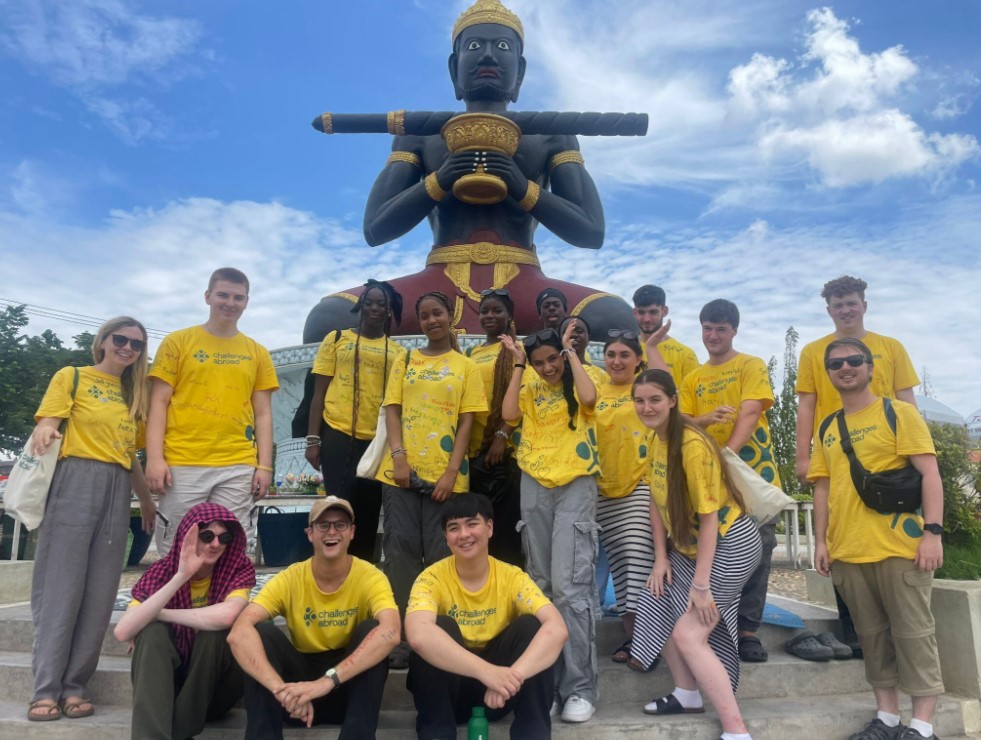
Ciaran has now taken students to Nepal, Cambodia, and Peru, and each trip has left its mark. But when asked which was the most successful, he doesn’t hesitate.
Peru. “It was so exotic,” he explains. “To go to South America and Machu Picchu is rare. If you had to pick a place that’s really exotic, it would be a place like Peru.” But beyond the destination itself, it was the breadth of enthusiasm across the school that made it special. “It’s not just me, it’s not a one man band here. There’s about ten teachers that are really for it.” That collective energy, he believes, is what transforms a school trip into something that reverberates long after students return home.
Building global citizens from the ground up
Ciaran has never been content to let the trip do all the work. This year, he launched Global Links, a weekly extracurricular club open to Year 11 and Sixth Form students, designed to build the curiosity, confidence, and cultural awareness that international programmes demand.
The club is deliberately varied. One week, students might learn basic Japanese. The next, someone shares their travel experience, or the group learns German, or they’re introduced to sign language. “Every Monday we do a different class,” Ciaran explains. Tonight alone, he’s teaching the group Japanese phrases, walking them through a quiz, showing photos from his own time in Japan, and sending them home able to introduce themselves in a new language.
The club also serves as a gateway to the trips themselves. Students who attend consistently are invited to apply for a place, and the application process is taken seriously. “They have to fill out an application, and then they might be interviewed or they might do a presentation,” he says. “They’re learning how to apply for a job effectively. They learn how to maybe be nervous and still perform, sitting in front of a panel of three adults and not having an imposter syndrome.”
Students who aren’t selected are encouraged to keep attending. They’re still building something valuable: commitment, curiosity, a record of engagement they can point to when they apply for university or their first job.
What makes families say yes
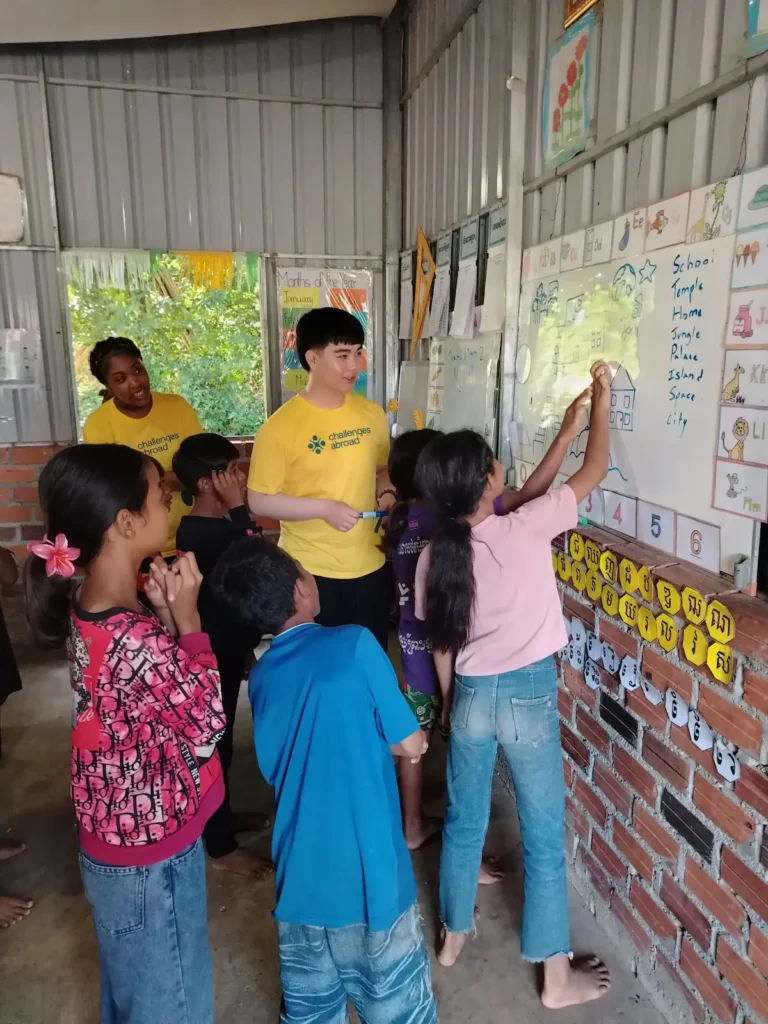
Ciaran is candid about the barriers families face when considering sending a child abroad, often for the first time. The first question is almost always the same: will my child be safe? Safeguarding is the biggest concern, and it is one Challenges Abroad takes seriously. “The risk assessments that Challenges Abroad provide are really helpful,” he says.
What reassures parents most, he has found, is human connection. The fact that Lizzie George has visited the school in person. The fact that Ciaran himself has been on the trips and can say, hand on heart, that his students were safe, stretched, and transformed. “They can literally say, you work for that company. And I can say, yeah, I’ve been there. I’ve been on the trip.”
A relationship built on trust
When other providers have approached Archbishop Ilsley, Ciaran has stayed with Challenges Abroad. The reason, he says, is straightforward. “Why fix it if it isn’t broke?” But it goes deeper than that.
“Having that personal touch, meeting Arvind Malhotra, CEO, hearing about them, hearing their story and their mission to create more global citizens, I just connected with both Arvind and Lizzie.” Lizzie George, in particular, has been a constant presence across every trip and every school he has worked in. “The one person who has been constant throughout all of this has been Lizzie. She’s very like-minded, she’s really efficient, she delivers.”
That consistency, that sense of being known and cared about, is something no competitor has been able to replicate.
A relationship built on trust
When other providers have approached Archbishop Ilsley, Ciaran has stayed with Challenges Abroad. The reason, he says, is straightforward. “Why fix it if it isn’t broke?” But it goes deeper than that.
“Having that personal touch, meeting Arvind Malhotra, CEO, hearing about them, hearing their story and their mission to create more global citizens, I just connected with both Arvind and Lizzie.” Lizzie George, in particular, has been a constant presence across every trip and every school he has worked in. “The one person who has been constant throughout all of this has been Lizzie. She’s very like-minded, she’s really efficient, she delivers.”
That consistency, that sense of being known and cared about, is something no competitor has been able to replicate.
What they take home
The outcomes Ciaran has watched unfold over years of trips are consistent. “Confidence, resilience, communication skills, they’re the big three,” he says. Students who have navigated a fortnight abroad, away from family, working in communities very different from their own, return with something that no classroom exercise can replicate. “If you go to Peru for two weeks on your own, you come back different.” Nothing that follows, whether a university interview, a first job application, or moving away from home for the first time, feels quite so daunting afterwards.
For many, the journey doesn’t end there. Alumni who participated in programmes during their school or college years frequently return as Challenge Leaders at university, this time guiding a new cohort through the same experience that shaped them. It is a natural next step: the skills built on the ground, communication across cultures, adaptability, teamwork under pressure, continue to deepen with every new role taken on.
Global citizenship is crucial
With Thailand on the horizon, a buzzing Monday night club, and a school community increasingly alive to the possibilities of the world beyond Birmingham, Ciaran Clinton is far from done. “Global citizenship is a really big thing here,” he says. “And it’s crucial.”
Interested in creating similar ethical, transformative experiences for your students? Contact us to learn more about our programmes.
Join Challenges Abroad in today.
Gain insights to a different culture, experience new things and begin your journey to global citizenship!